
58: Appreciating self awareness
How do you get comfortable being yourself?
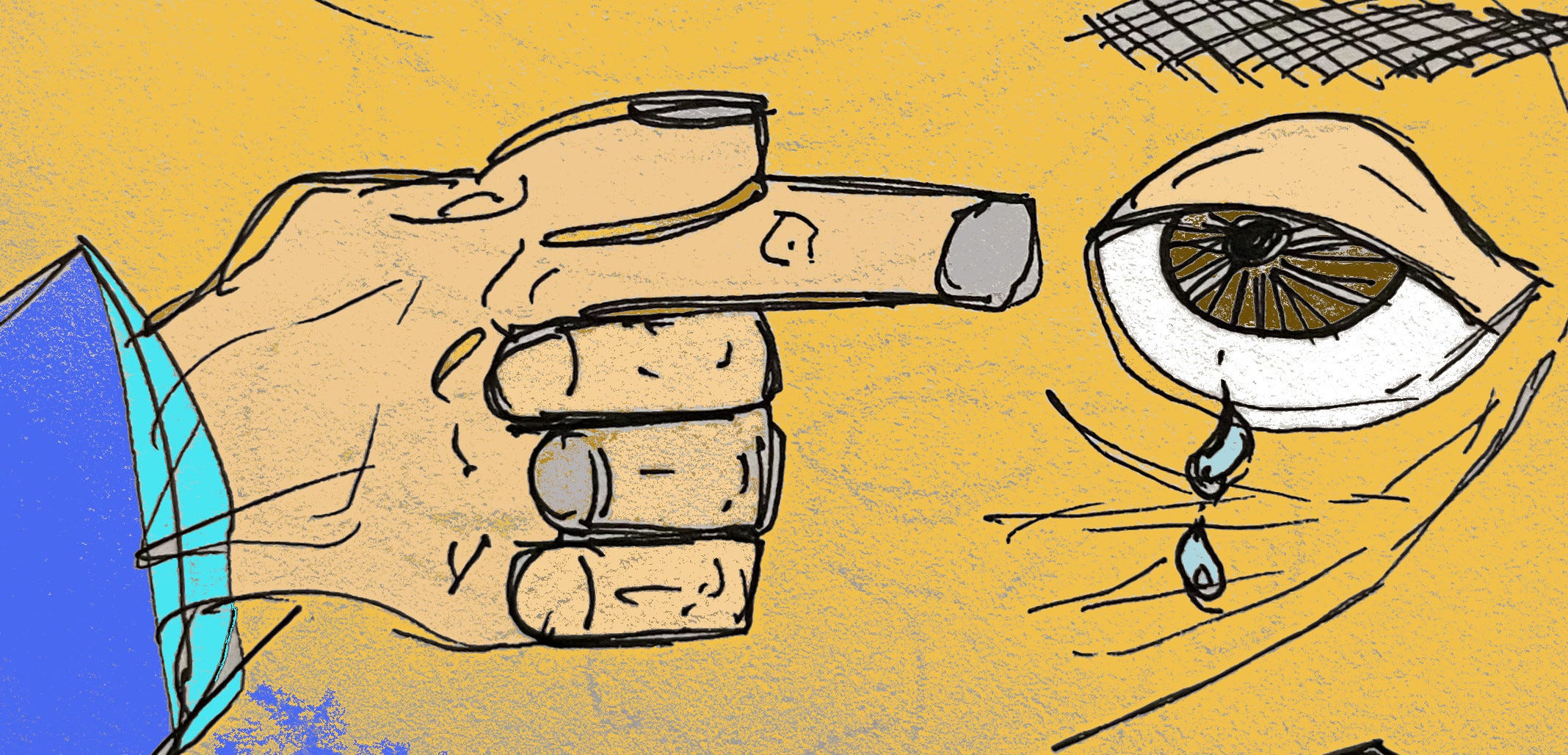
I’ve had several conversations with people at work recently where the other person ends up saying something like, “You are so self aware. That’s a rare thing.” Most of these folks are senior executives, and they say this in response to me telling them that I don’t want to be a senior executive. When I first heard a colleague say this, it sounded familiar. Then I remembered that I’ve said the same thing to other people. Typically, I’ve said this when someone more junior to me is telling me what their aspirations are, what they want to do, or what they don’t want to do. A thought occurred to me - is telling someone else that they seem self aware a sign that you are not self aware?
I think a lot of successful business people know what they want (or, at least, they know what they think they want). But I wonder how well they know who they are. Desire can be a very powerful motivator. Awareness, on the other hand, seems to have the opposite effect. The more I have thought about who I am, as opposed to what I want or what I need, the less I care about what I achieve.
Things have been changing for me at work in a way that has given me the opportunity to step out of the busyness that can be so addictive and wonderfully distracting, and to look at things more objectively. I can’t count how many times I’ve said to myself in the past few months, while reading a work email, or while listening to my colleagues in a meeting, “Wow, I don’t care about this at all.” And, when that acknowledgement pops into my head, I feel this sense of light hearted relief wash over me as I think about how many years I spent trying to make myself care, or thinking that it mattered. And I look at my colleagues and I think, They look like they really care about this. And it makes sense - how could they do what they do, so many hours a day, at the expense of so many other human experiences (like, taking a nap for example, or reading a novel), if they didn’t genuinely care?
In my case, I was able to put in the long hours and endure all the meetings, flights, nights in hotel rooms, awkward conversations, discomforts, and excesses because I didn’t really know what I was passionate about. I don’t think that’s true of everyone, though. I tried to feign passion for work for many years, and I succeeded in making myself think I cared. But when I see the depth of excitement in some of my colleagues eyes, their genuine fascination for the nitty gritty details of what seem to me like impossibly arcane technical abstractions, their ability to follow, feed off of, and respond to the most obtuse comments and observations, I think they can’t be making this up.
For years, I tried to be honest with people. I would tell them that I wasn’t a technical person, that I didn’t really understand how the software our company produces actually works, and that my ability to talk about it with seeming intelligence was simply a matter of being a good actor and a keen observer. I have the ability, it turns out, to listen to what someone who knows what they are talking about says, and then to convincingly say the same thing, use the same terms, follow the same logical flow, as if I possess the knowledge myself. I think the word for this is “copying” or “imitating”. If you do it in writing, it’s called plagiarism. But, if you do it in casual conversation, it’s called “fake it till you make it” and is commonly encouraged as a technique for rising business people (there are whole books written about it, in fact!).
This idea of “fake it til you make it” reminds me of masking, which is something I didn’t become fully conscious of until my autism diagnosis. I’m currently reading a fascinating book by Sharon Blackie that explores the changes people go through in the second half of life, and this passage leapt out at me:
When we’re young, we’re guided by norms that are imposed by family and society, striving to become what is expected of us; the result is the development of what Jung called the persona: the mask which we present to the world. The persona rarely reflects our true self, because over the years we compromise, we adapt; we pretend to be something that we’re not — and along the way, in some fashion or other, we begin to betray our authentic nature.1
In the neurodivergent communities I’ve participated in, we talk a lot about the realization that we are masking and how we can work to stop doing it. My observation is that a lot of neurodivergent people find the realization of masking and the desire to rediscover our authentic nature liberating, but people who are not going through this experience (neurotypical or otherwise) don’t seem to react well to it. I know in my case, and I suspect in many others’, masking is what enabled me to achieve what I have done - so it seems natural that unmasking would have some consequences. What I find intriguing about this description from Blackie’s book is that this phenomenon of masking in Western society has been talked about at least since Jung and seems to be endemic to our culture. Jung called the process of unmaking “individuation”. Blackie continues:
The process of individuation, then, is the process by which we begin to understand, in the second half of our lives, that the way we’ve been living is not the way that we need to live now — that we need to change, to live in a manner that is more aligned with our passions and our longings.2
This, I think, is what is happening to me. I’m 46 years old, unmasking, and moving towards a way of life which is more aligned with what I really care about. This is impacting how I think about work, my desire to spend more time writing, reading, meditating, and just thinking and resting. It’s also impacting how I connect with other people. I find that I’m thriving from small connections with others, in some online way, or through meetings of less than an hour, where we can talk and share and have a meaningful connection, but not feel the need to fill extra time together. In the past, my favorite way of connecting was by having long, boozy dinners with friends. Those were fun, to be sure, but was it about meaningful connection, or was it about drinking, acting out the “persona”, performing in some way, or looking to be entertained?
Removing alcohol, I think, has made it easier for me to develop what feels like a more true self awareness. I’m not feeling the need to perform, to be what I think others want me to be, or to act in ways that I think others will find entertaining. I am simply able to feel more enjoyment in just being. That sounds healthy on the face of it, but it also has consequences that some may see as unhealthy. I’m less inclined to do some of the things I used to do - like go to events, social gatherings, places where large groups of people mingle and share ideas. I had fun doing those things, but only if I was drinking. And, I don’t think I was being true to myself. Being more self aware, perhaps, means disappointing others more frequently. I’ve heard that pushing yourself to meet other people’s expectations is a good motivator and helps you succeed. But who’s definition of success are we talking about? And is inviting a continual sense of needing to live up or exceed other people’s expectations good for having self awareness and self appreciation?
I think my ultimate conclusion here is that I haven’t spent enough time thinking about what is really important to me, and I’ve defaulted to assuming that the expectations laid out by social norms (or specific other people) are the correct thing for me to aspire to. Now, in the second half of life, I am realizing that those things don’t matter to me as much as I thought, which gives me the freedom to let myself go in a direction that feels more natural to my instinct. At work, this means either leaving my job, or significantly changing my career path so that I’m not in a leadership role with its associated pressures and expectations. In the rest of my life, I’m still figuring out what the implications are, but I think it means being more purposeful in choosing how I connect with other people, and which activities I engage in, so that I don’t feel the need to mask, or to drink. This helps me maintain my energy and avoid draining myself, the way I used to do for the sake of social interactions. I am more comfortable saying “no” than I used to be, and feel less guilty taking time for myself. I’m still finding the right balance, but overall I feel like I’m on a more sustainable path now than I had been.
Blackie, Sharon. Hagitude (p. 69). New World Library. Kindle Edition.
ibid.